
Why to choose java over python for enterprise application in 2026 : Agar aap kisi beginner se pucho ki sabse pehle kaunsi programming language seekhni chahiye, toh 90% log bolenge—Python. Kyun? Kyunki iska syntax aasan hai, code chota hota hai, aur 2 minute me script taiyar ho jaati hai.
Lekin agar aap dhyan se dekho, toh duniya ke sabse bade banks, insurance giants, aur e-commerce platforms ka jo backend hai, wahan aaj bhi Java hi raaj kar rahi hai.
Mera tech industry me 6+ years ka Java developer job experience hai, aur is dauran maine kai nayi languages ko aate aur jaate dekha hai. Lekin jab baat aati hai bade scale par secure aur mission-critical applications banane ki, toh tech architects aankh band karke Java trust karte hain.
Agar aap ek developer hain jo soch rahe hain ki Python ke zamane me Java relevant hai ya nahi, ya fir aap ek technical lead hain jo apne project ke liye sahi tech stack chun rahe hain, toh ye article aapke liye hai. Aaj hum production-level par baat karenge ki Why to choose Java over Python for enterprise applications.
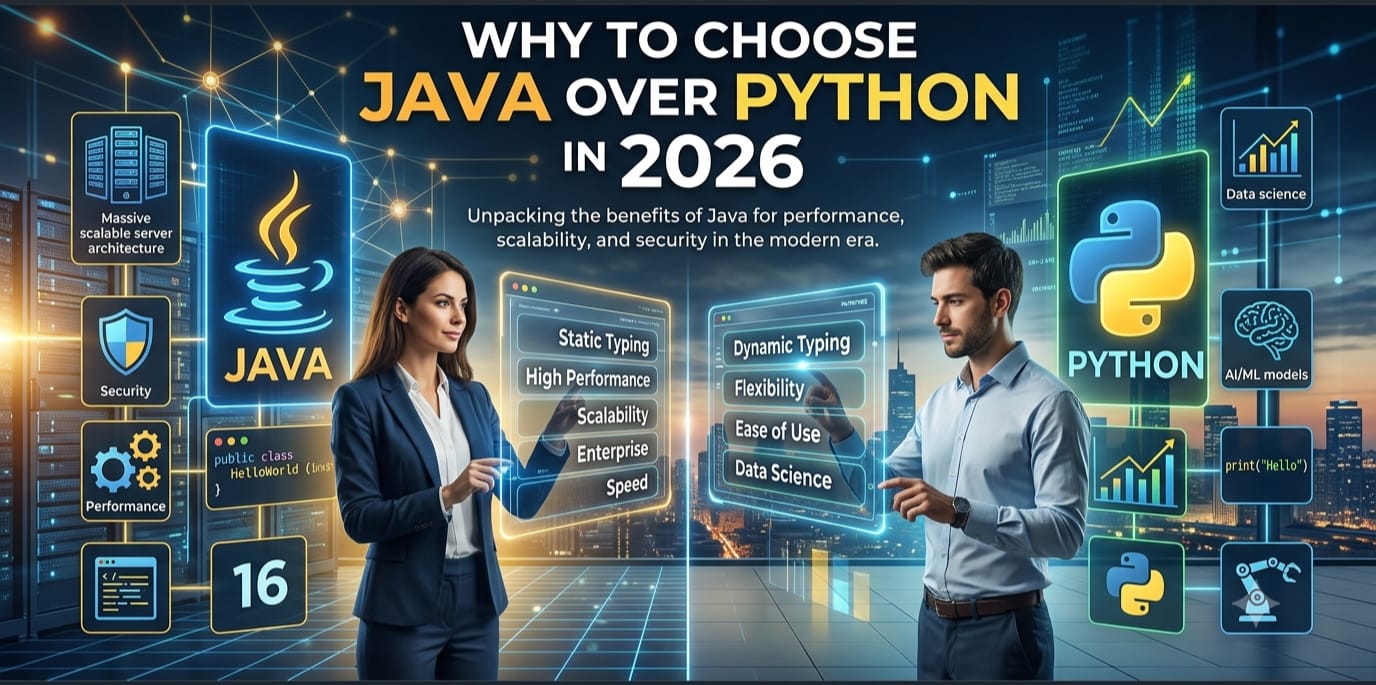
1. Statically Typed vs Dynamically Typed: Bade Projects Ka Sabse Bada Sirdard
Python ka sabse bada selling point ye hai ki ye dynamically typed hai. Yani aapko variable ka data type batane ki zaroorat nahi hai:
# Python Example
data = “Hello World”
data = 100 # Python me ye bilkul valid hai, par bade projects me khatarnak hai!
Jab aap ek chota-mota script likh rahe ho, tab toh ye bohot fast lagta hai. Lekin jab ek enterprise software development project me 50+ developers ek sath code commit kar rahe hon, toh ye dynamic nature ek nightmare ban jata hai.
Java Ka Compilation Advantage
Java ek statically typed language hai. Iska matlab aapko pehle hi batana padega ki aapka variable kis tarah ka data hold karega:
Java Example
String data = “Hello World“;
//data = 100; -> Ye line likhte hi Compile-Time Error aa jayega!
Production Me Iska Kya Fayda Hota Hai?
-
Catching Bugs Early: Java aapke errors ko code run hone se pehle, yani compilation phase me hi pakad leta hai. Python me errors runtime par aate hain. Sochiye, raat ko 3 baje aapka production server crash ho jaye sirf isliye kyunki kisi ne integer ki jagah string pass kar diya tha—Java aapko is sirdard se bachata hai.
-
Refactoring Confidence: Jab aapko 500 microservices ke andar kisi method ka naam badalna ho, toh Java ka compiler aur IDE aapko safely guide karte hain. Python me bina kuch tode bade codebase ko refactor karna bilkul blindfolded chalne jaisa hai.
2. Multi-threading and Concurrency: Lakho Requests Ko Handle Karna
Jab aap kisi global audience ke liye application bana rahe hain (jaise koi IRCTC jaisa booking system ya banking app), toh aapke server par ek sath lakho log aate hain. Wahan aapko chahiye high throughput aur low latency.
Python Ka Sabse Bada Speedbreaker: The GIL
Python me ek badi limitation hoti hai jise GIL (Global Interpreter Lock) kehte hain. GIL ki wajah se Python ek waqt me sirf ek hi native thread ko execute karne deta hai. Matlab, aapke paas kitna bhi bada multi-core server ho, Python CPU-bound tasks me us pure hardware ka fayda nahi utha pata.
Java’s Multi-threading Supremacy
Java ko day one se concurrency ke liye design kiya gaya tha.
-
Native Threads: Java aapke modern cloud servers ke har ek core ko pure tarike se utilize karta hai.
-
Java Virtual Threads: Modern Java versions me Project Loom ke aane se aap bina memory crash kiye lakho lightweight virtual threads ek sath run kar sakte hain.
Java ka concurrency model enterprise apps me massive traffic ko smoothly handle karne me Python se kaafi aage hai.
Ajit Jadhao

Thanks for visiting Ajitation.com, Ajitation is optimized for learning and training. Examples might be simplified to improve reading and learning. Tutorials, references, and examples are constantly reviewed to avoid errors, but we cannot warrant full correctness of all content.